
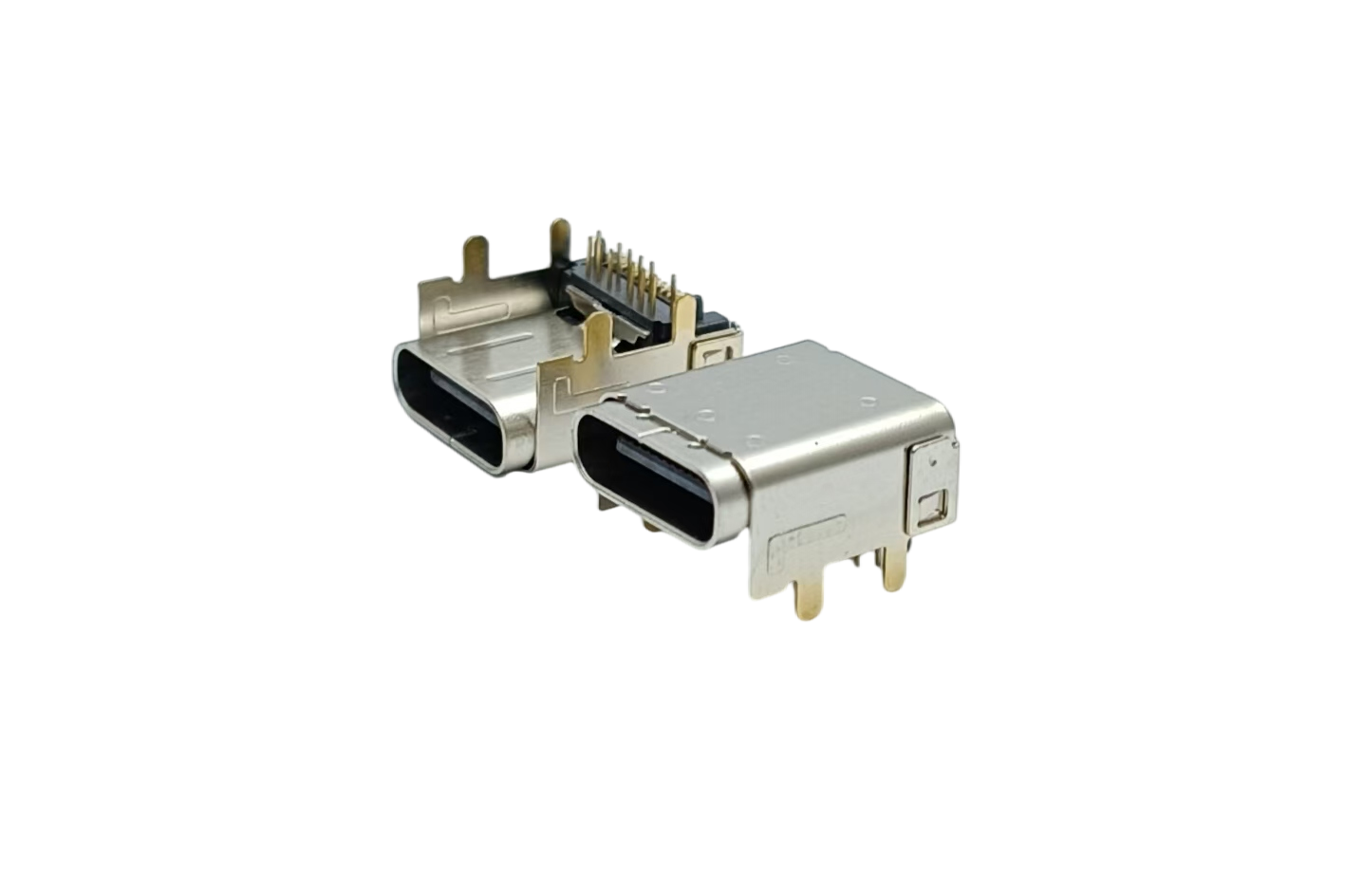
Waterproof USB Connector ratings commonly include IP67 and IP68. IP67 has defined temporary-immersion test conditions, while IP68 applies to continuous immersion under conditions agreed between the manufacturer and user and verified in the relevant test report.
A product specification lists IP67, and the customer immediately asks, “How long can it stay underwater?” How should you answer? IP68 may sound more advanced than IP67, but do you know exactly how their test conditions differ? Before selecting a Waterproof USB Connector, understanding what each rating actually represents is more important than comparing the numbers alone. In practice, an incorrect rating may either add unnecessary cost or provide insufficient protection. The problem often begins with the assumption that a higher number always means a product is waterproof in every situation.
How to Read an IP Code: Separate Ratings for Solids and Water
IP codes are defined by IEC 60529 to classify the degree of protection provided by an enclosure. The first digit after “IP” indicates protection against access and solid foreign objects, including dust, on a scale from 0 to 6. The second digit indicates protection against water on a scale from 0 to 9. IEC 60529 includes IPX9 for high-pressure, high-temperature water jets, while the IPX9K designation commonly used in automotive applications is specified in ISO 20653. The two should not be treated as identical.
For IP67, the first digit, 6, is the highest dust-protection rating and indicates a dust-tight enclosure under the specified test conditions. The second digit, 7, indicates protection against harmful water ingress during temporary immersion under specified conditions. Dust and water are separate test categories with separate acceptance criteria, so both digits must be evaluated individually.
IP67 vs. IP68: Temporary and Continuous Immersion
The principal difference between IP67 and IP68 is the type of immersion and how the test conditions are defined. Under IEC 60529, IPX7 is a temporary-immersion test conducted for 30 minutes. The immersion position depends on the size of the specimen, although product literature often summarizes the condition as “1 meter for 30 minutes.” Passing the test means that water does not enter in a quantity that causes harmful effects under the specified conditions; it does not mean that the product can be used underwater indefinitely.
IPX8 applies to continuous immersion. Its conditions are agreed between the manufacturer and user and must be more severe than the IPX7 conditions, but there is no single depth and duration applicable to every IP68 product. One product may be tested at 1.5 meters for 30 minutes, while another may be tested at a greater depth for several hours. When comparing two IP68 connectors, review the actual depth, duration, specimen condition, and acceptance criteria stated in the specification or test report.
| Comparison | IP67 | IP68 |
|---|---|---|
| Immersion type / depth | Temporary immersion; specimen position is set according to IEC 60529 and is often summarized as 1 meter | Continuous immersion; depth is agreed between manufacturer and user and must be more severe than IPX7 |
| Test duration | 30 minutes | Agreed for the product and application; not identical for every IP68 product |
| Standard basis | IEC 60529 specifies the IPX7 test conditions | IEC 60529 defines the IPX8 principle; actual conditions must be verified in the specification or test report |
| Typical selection context | Risk of temporary immersion | Continuous immersion under agreed conditions; not unlimited use at any depth or duration |
Why Waterproofing a USB Connector Is Different from Sealing an Enclosure
Waterproofing a USB connector is more complex than sealing a conventional enclosure because the connector is itself an opening. A plug must be able to enter while the design prevents water from causing harmful effects on the internal contacts and electrical performance. These requirements must be addressed together, making the sealing structure more challenging.
Protection may be specified or verified separately in the mated and unmated states. When no cable is connected, the port may require a protective cap or elastomeric seal. Once connected, interfaces such as a USB Type-C Connector or Micro USB Connector may use an O-ring, gasket, or silicone boot to seal the gap between the plug and receptacle. The applicable configuration and test state should always be confirmed in the product specification.
Some specifications state an IP rating only for the mated condition and do not define protection when the connector is unmated. For a port that is frequently exposed and rarely connected, such as a spare port on outdoor equipment, failing to verify this detail can create a water-ingress risk even when the connector has passed testing in a different configuration.
How to Select a Waterproof USB Connector
A higher numerical rating is not automatically the best choice. Selection should be based on exposure risk, operating conditions, and cost. Begin with three questions:
Will the connector be immersed for an extended period?
Will the port be directly exposed to moisture when no cable is connected?
What temperatures and temperature cycles will the product experience? These conditions may affect seal aging and performance.
Use the answers as a starting point for determining whether IP67, IP68, or additional testing should be considered.
| Application | Suggested evaluation | Key considerations |
|---|---|---|
| Charging ports for wearables, wristbands, or earbud cases | Start by evaluating IP67 | Typically exposed to sweat, splashes, or brief immersion; also confirm protection in the unmated state |
| Ports on outdoor surveillance equipment or sensors | Evaluate rain, pooling, and immersion risks | Confirm mated and unmated states; if water jets are expected, evaluate IPX5 or IPX6 separately |
| Ports inside industrial control cabinets | Assess the actual exposure risk | Also confirm operating temperature, chemicals, oils, and cleaning methods |
| Connectors in automotive electronic modules | Follow vehicle requirements and installation location | Vibration, thermal cycling, and high-pressure cleaning may require additional tests such as ISO 20653 |
| General consumer-electronics ports | Start by evaluating IP67 | Most applications address splashes and temporary immersion; make the final decision based on actual risk and cost |
This table is only a starting point. Even with the same IP68 rating, a Waterproof USB Type-C Connector and a Micro USB Connector may use different sealing methods because their interface geometry and contact configurations differ. The final decision must consider the connector structure, mating condition, and actual test conditions.
Additional Specifications to Confirm Before Selection
In addition to the IP code, several specifications are easy to overlook when selecting a Waterproof USB Connector.
First, determine whether the sealing structure affects mating durability. Sealing materials may wear through repeated friction, so confirm whether the IP test is performed on new samples or after a specified number of mating cycles or environmental durability tests.
Second, confirm operating temperature and material compatibility. Water temperature, thermal cycling, cleaning agents, oils, and ultraviolet exposure may all affect seal performance and service life.
Third, confirm whether the interface geometry suits the application. The USB Type-C Connector is widely adopted today, but its waterproofing structure differs from that of the earlier Micro USB interface.
Before sampling, define the immersion depth and duration, temperature range, number of mating cycles, and mated or unmated condition. If the equipment will also be exposed to water jets or high-pressure cleaning, evaluate the applicable IPX5, IPX6, or IPX9 test separately. An immersion rating does not automatically demonstrate compliance with water-jet tests.
Frequently Asked Questions
Q: How long can an IP67 USB connector remain underwater?
A: The standard IPX7 test duration is 30 minutes, and the immersion position is set according to the specimen size under IEC 60529. Product literature commonly summarizes this as “1 meter for 30 minutes.” This is a test condition and does not mean the product is suitable for long-term underwater use. If continuous immersion is required, evaluate IP68 and confirm the actual depth, duration, specimen state, and acceptance criteria with the supplier.
Q: Does the IP rating still apply when no cable is connected?
A: Protection in the unmated state must be confirmed from the manufacturer’s specification or test results for that exact condition. Some Waterproof USB Connector ratings apply only when the cable is connected, while the unmated port may require a protective cap. Confirm the unmated test result before selection.
Q: How often should the seal of a Waterproof USB Connector be replaced?
A: There is no universal replacement interval. Seal life depends on the material, mating cycles, thermal cycling, chemicals, and ultraviolet exposure. Repeated friction and severe environmental conditions may gradually reduce elasticity and protection. Inspection and replacement should follow the product specification, use frequency, and maintenance plan.
Q: Is IP68 always more waterproof than IP67?
A: For immersion classification under IEC 60529, IPX8 conditions must be more severe than IPX7 conditions. However, IP68 has no single depth and duration that applies to every product, so IP68 products from different manufacturers or product families cannot be compared by the code alone. IP68 also does not automatically demonstrate protection against water jets or high-pressure cleaning. Review the actual test report, including depth, duration, mating condition, and test method.
Q: Do Waterproof USB Type-C and Micro USB connectors use different waterproofing methods?
A: A Waterproof USB Type-C Connector and a Micro USB Connector use similar sealing principles, but their interface geometry and contact configurations differ. As a result, the detailed sealing and edge-treatment structures may vary. Review the connector outline, panel opening, mating component, and test condition rather than comparing only the IP code.
Understand the IP67 and IP68 Definitions Before Selecting a Waterproof USB Connector
Both IP67 and IP68 can indicate protection against dust and immersion, but IPX7 addresses temporary immersion under defined conditions, while IPX8 requires verification of the manufacturer’s actual continuous-immersion conditions. When selecting a Waterproof USB Connector, confirm the depth, duration, mating state, and application environment. Working with a knowledgeable USB Connector Manufacturer is more valuable than relying on the rating alone.
Walta Electronic specializes in the design and manufacturing of USB and waterproof I/O connectors, including Micro USB, USB 2.0, and USB Type-C interfaces. Based on the required immersion depth, temperature range, mating cycles, and mated or unmated condition, our engineering team can support the evaluation of structure, materials, and test requirements from the product-development stage.
If you are looking for a Custom Connector Manufacturer that can adapt structural designs to your application, share your required immersion depth and duration, temperature range, mating cycles, and mating condition with the Walta Electronic engineering team for further evaluation.
Walta Electronic Co., Ltd.
Tel: +886-2-2657-7778
Email: inquiry@walta.com.tw
Address: 3F.-2, No. 15, Ln. 360, Sec. 2, Neihu Rd., Neihu Dist., Taipei City 114, Taiwan