
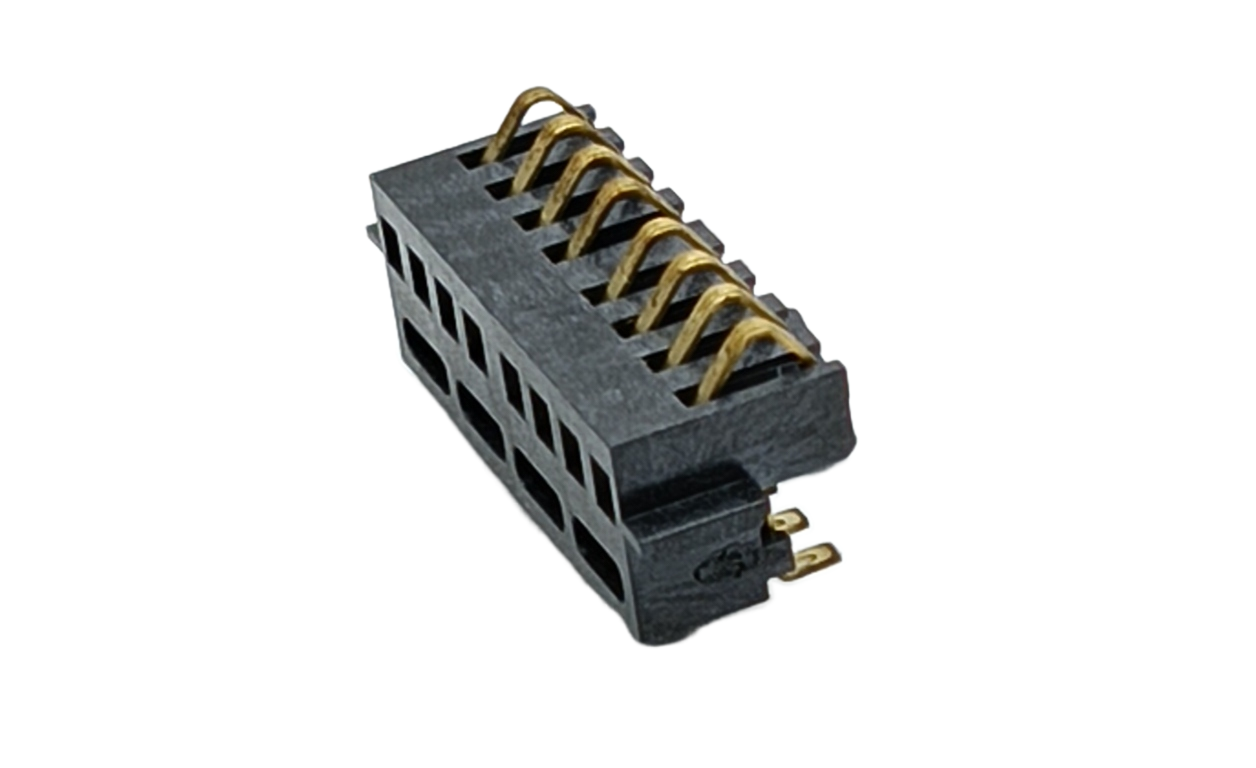
A Spring-Loaded Battery Connector uses resilient contacts to conduct electricity, while a Blade Type Battery Connector uses flat metal blades that mate with spring contacts. Current capacity and mating cycle life depend on the specific design, so selection should reflect the application.
Have you ever hesitated between spring-loaded and blade type designs when choosing a battery connector? Their appearance varies by design but once installed in your product, can you tell whether they will handle the required current or develop contact problems prematurely? What matters is how much current your product needs and how often the battery will be inserted and removed. The following sections explain how to choose between these two battery connector types by examining contact structure, electrical performance and application requirements.
How Do the Contact Structures of Spring-Loaded Battery Connectors and Blade Type Battery Connectors Differ?
Common battery connector contact designs include spring-loaded and blade types. Both connect the battery to the circuitry in portable devices but their mating interfaces differ. A Spring-Loaded Battery Connector uses flexible metal spring contacts or compressible spring-loaded pins that press against the battery terminals to maintain electrical continuity. A Blade Type Battery Connector uses flat metal blades that enter mating spring contacts, with contact pressure maintaining the electrical connection.
Common contact materials include brass and phosphor bronze, with plating selected to suit the application. Both types are available with surface-mount technology (SMT) or through-hole solder terminations; retention strength depends on the solder-tail and mechanical design. A common problem during development is choosing a connector based only on contact shape and price, then discovering during prototype testing that its mating cycle life or current rating does not meet actual operating requirements. This can force changes to the mechanical design. Checking current and mating cycle specifications during selection helps avoid these problems.
How Do the Two Contact Types Compare in Current Capacity and Mating Cycle Life?
Current capacity and mating cycle life are important when evaluating Spring-Loaded Battery Connectors and Blade Type Battery Connectors but neither can be determined from contact type alone. Small spring-loaded contacts are often used for low-to-moderate-current signal or power connections, although higher-current designs are also available. With sufficient conductor cross-sectional area and an appropriate contact design, some blade contacts can carry tens of amperes for high-current applications. The rated current and temperature-rise conditions must still be checked. Some spring-loaded contacts support thousands of mating cycles or more, making them suitable for devices with frequently replaced batteries. Blade contacts can also be designed for repeated mating and should not be assumed to serve only fixed installations or infrequent replacement. Product specifications must be checked for both types.
Contact plating also affects durability. Gold-plated contacts with a nickel underlayer provide good resistance to oxidation but wear resistance depends on the plating type, thickness and contact force. Gold should not automatically be considered more wear-resistant than tin or silver. End-of-life assessment should follow the contact resistance limit or permitted increase and the relevant test conditions in the product specification. A value of 50 milliohms (mΩ) is not a universal threshold.
| Comparison | Spring-Loaded Battery Connector | Blade Type Battery Connector |
|---|---|---|
| Contact structure | Flexible spring contacts or compressible spring-loaded pins press against terminals | Flat metal blades enter mating spring contacts to establish contact pressure |
| Current capacity | Model-dependent; small designs often serve low-to-moderate currents, with higher-current models also available | Model-dependent; some designs carry tens of amperes, subject to current ratings and temperature rise |
| Mating cycle life | Some models support thousands of cycles or more; check the specification | Repeated-mating designs are also available; check the specified cycle life |
| Common mounting methods | SMT or through-hole soldering; low-profile models are available | SMT or through-hole soldering; retention depends on the mechanical design |
| Typical applications | Consumer electronics such as cameras and wireless mice, plus medical measurement devices | Pluggable power modules, automotive applications and industrial equipment |
When Is a Spring-Loaded Battery Connector Suitable for Consumer Electronics?
A Spring-Loaded Battery Connector is an option for consumer electronics with user-replaceable batteries, as some models offer a low profile and support repeated mating. In devices such as cameras and blood glucose meters, properly specified spring contacts can maintain stable electrical connections within limited space. Cost depends on the structure, materials and plating and the connector should be selected to meet the required low-to-moderate-current signal and power requirements.
Wireless mice, bathroom scales and other small portable devices are also common applications. These products require relatively little current but place greater demands on connector height and ease of assembly. Low-profile spring contacts help save internal space. If your product requires frequent battery insertion and removal with modest current demand, a Spring-Loaded Battery Connector is usually a suitable starting point.
Why Are Blade Type Battery Connectors Often Considered for High-Current and High-Vibration Applications?
For high-current and high-vibration applications, a Blade Type Battery Connector with a suitable current rating and mechanical retention design may be considered. Sufficient conductor cross-sectional area and an appropriate contact design help carry higher currents, while reliable locking and contact force help maintain stability under vibration. A flat blade shape alone does not establish these capabilities. Applications include removable battery modules, automotive battery packs and field-replaceable power units in industrial equipment. These applications require contacts to carry high currents while remaining mechanically secure, with verification under the actual vibration conditions.
Whether a blade contact is suitable for frequent user replacement depends on its specific design. If the product requires repeated insertion and removal, check the rated mating cycle life and evaluate the wear resistance of the contact materials and plating instead of basing the decision solely on current capacity.
Frequently Asked Questions
Q: How many mating cycles can a Spring-Loaded Battery Connector withstand?
A: Some Spring-Loaded Battery Connectors can withstand thousands of mating cycles or more. The actual rating depends on the contact design and test conditions. A higher-current design does not necessarily offer a longer mating cycle life. Contact plating and the contact resistance requirements in the product specification must also be considered. Gold-plated contacts provide good resistance to oxidation but wear resistance depends on the plating type, thickness and contact force. Gold should not automatically be considered more wear-resistant than tin or silver.
Q: How much current can a Blade Type Battery Connector carry?
A: Some Blade Type Battery Connectors can carry tens of amperes but this does not apply to every model. The actual rating depends on the contact cross-sectional area, material, contact design, plating and temperature-rise conditions. For high-current applications, select the connector according to its rated current and operating conditions rather than contact type alone.
Q: What specifications should be checked besides the battery connector contact type?
A: Contact pitch, contact plating and mounting method should also be checked. These specifications directly affect electrical stability and service life once the connector is installed. Include them in the selection process instead of comparing contact shapes alone.
Q: Are Spring-Loaded Battery Connectors and Blade Type Battery Connectors interchangeable?
A: Spring-Loaded Battery Connectors and Blade Type Battery Connectors are generally not directly interchangeable because their structures and mounting arrangements differ. If the product design has not yet been finalized, confirm the required current and mating frequency before choosing a contact type. This helps avoid discovering a specification mismatch during prototype testing.
Q: What commonly causes poor electrical contact in battery connectors?
A: Common causes include oxidation or wear of the contact plating and insufficient contact pressure. Vibration and dust in the operating environment can also affect connection stability. As an initial troubleshooting step, check whether contact resistance meets the limit or permitted increase specified for the product. Do not apply 50 milliohms as a universal threshold.
Choosing a Spring-Loaded Battery Connector: Start with Current and Mating Cycle Requirements
Neither Spring-Loaded Battery Connectors nor Blade Type Battery Connectors are inherently better. The choice depends on the required current, mating frequency and exposure to vibration. Spring-loaded contacts are a useful starting point for low-to-moderate-current products with user-replaceable batteries. For high-current or high-vibration environments, blade contacts with an appropriate current rating and reliable retention can be evaluated. In both cases, confirm the actual specifications and test results.
If you are evaluating battery connector contact types for a new product, documenting the current requirements, mating frequency and available mounting space will help you make a more suitable choice than comparing contact shapes alone. As a Custom Connector Manufacturer, Walta Electronic develops both Spring-Loaded Battery Connector and Blade Type Battery Connector product lines and can help assess suitable contact solutions based on your application requirements.
Walta Electronic
Tel: 886-2-2657-7778
Email: inquiry@walta.com.tw
Address: 3F-2, No. 15, Lane 360, Section 1, Neihu Road, Neihu District, Taipei City, Taiwan