
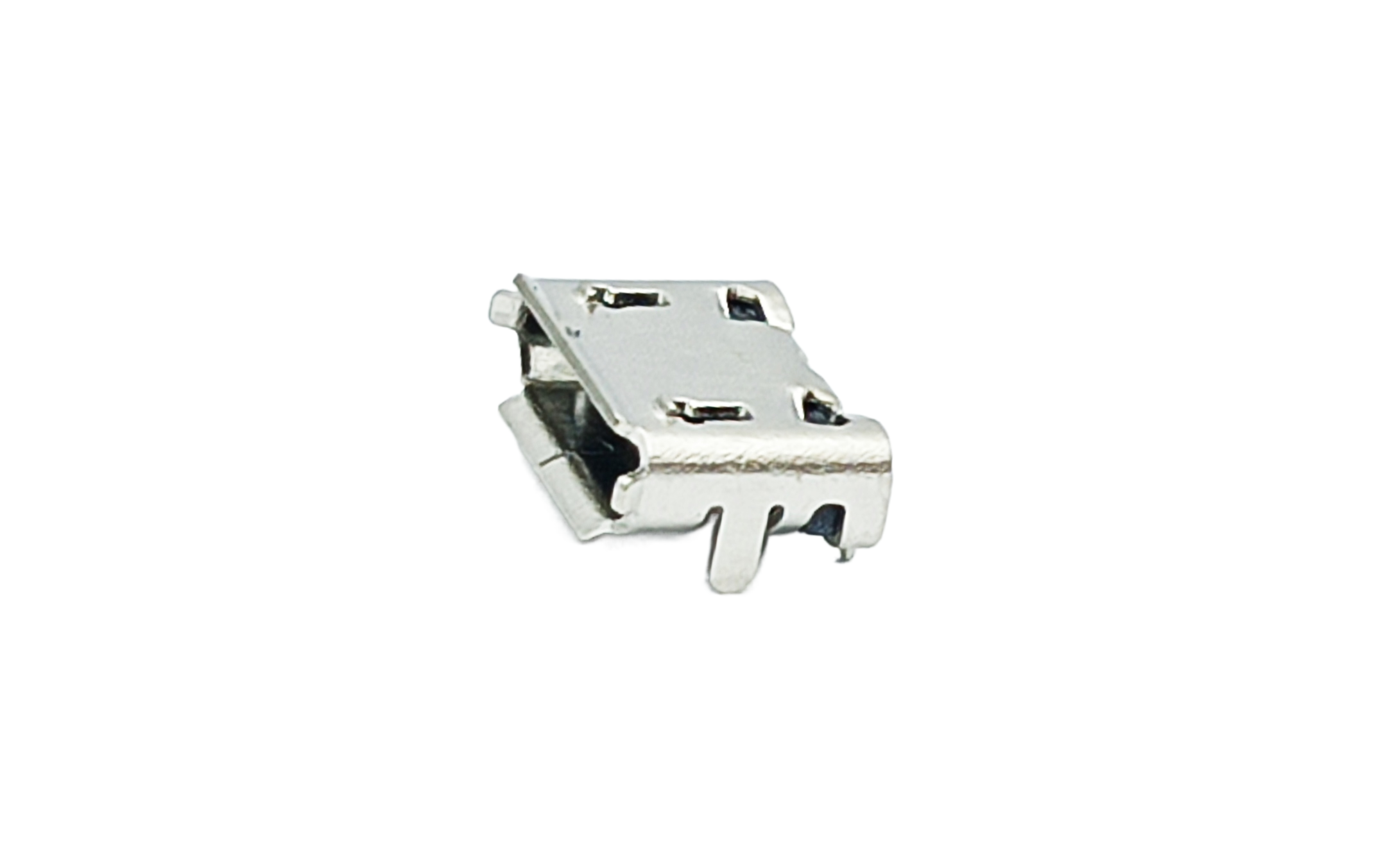
D03-0718-05035
Micro USB Receptacle, Normal Type, SMT

The Micro USB Receptacle Normal Type SMT Connector uses a compact standard contact layout for broad USB device compatibility. It supports stable USB 2.0 data transmission while conserving PCB space in portable products. Surface mounting enables efficient automated assembly, and the durable structure provides dependable mating performance for consumer electronics, handheld devices, wearables, industrial equipment, and embedded systems.

Interested in This Product?
Add this product to your inquiry list and send us your requirements. Our team will get back to you with the information you need. If you can’t find exactly what you’re looking for, feel free to contact us.

Product General Information
Component Type
Receptacle
Mounting Style
Top-Mount
Contact Pin Type
SMT
Orientation
Horizontal
Product Specification

Physical Characteristics
Shell Material
Stainless, Ni Plating
Contact Count
5 Pin
Contact Material
Copper Alloy
Contact Plating
Gold Flash
Pitch
0.65mm
Housing Material
High Temp Thermoplastic
Housing Color
Black

Electrical Characteristics
Insulation Resistance
1000MΩ Min. @ 500VDC
Current Rating
1&5 Pin 1.8A, 2&3&4Pin 0.5A
Voltage Rating
DC 5V
Dielectric Withstanding Voltage
100VAC/Min.
Contact Resistance
30mΩ Max.

Mechanical Characteristics
Insertion Force
3.57kgf Max.
Withdrawal Force
0.81kgf Min.
Durability
10000 Cycles Min.

Solder Process Characteristics
Solder Process Type
Reflow
Recommended Process Temperature
260°C 5 ~ 10 Seconds

Environmental
Operating Temperature Range
-40°C ~ +85°C
Storage Temperature Range
-20°C ~ +85°C
RoHS
RoHS 2.0
Halogen Free(HF) Compliance
Yes

Others
Packaging
Tape Reel

Key Features
Compact Micro USB Design
Conserves PCB space in portable and compact electronic products.
Standard Contact Configuration
Provides broad compatibility with standard USB-enabled electronic devices.
Durable SMT Construction
Supports automated assembly and dependable long-term mating performance.

Typical Applications
Electronics
Consumer electronics and computing devices.
Industrial
Automation, control systems, and robotics.
Telecommunications
Networking and communication equipment.